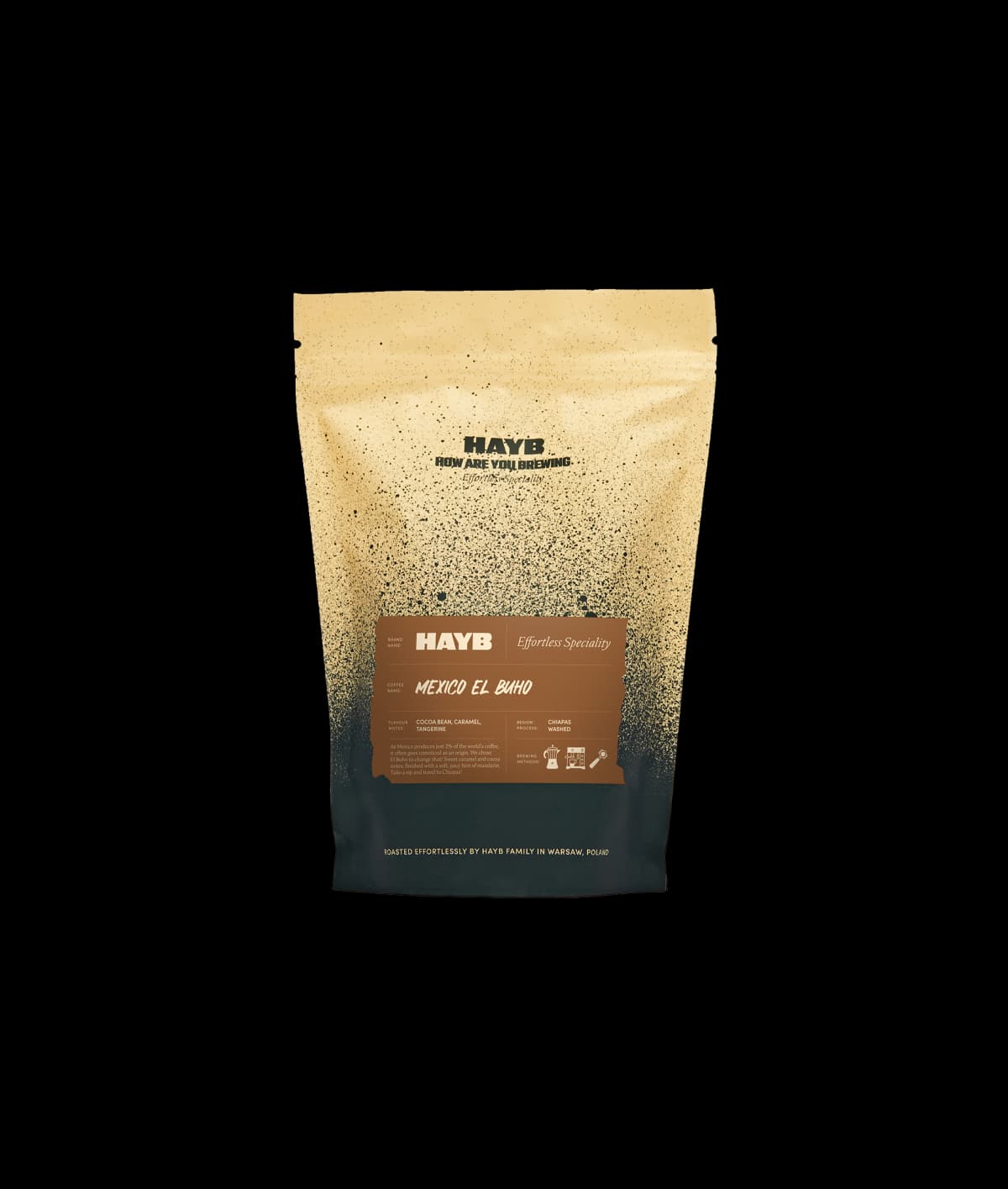
Mexico El Buho Espresso
About This Coffee
Chiapas in a cup. If it weren't for Andreas Kussmaul, this coffee wouldn't exist. I would never have reached the Chiapas region in Mexico, and certainly not Los Altos - the northeastern highlands in the state of Chiapas, which are two hours' drive from the state capital, San Cristobal de las Casas. Andreas was my guide, and now he is one of the funniest buddies I have, and even though he lives far away in the state of Veracruz in Mexico, we often talk. The coffee regions of this country are a place where you need a pass (or at least a Mexican passport) to feel safe. During the long hours of driving, Andreas told me about the challenges faced by local farmers and the NKG BLOOM program. In short, it is an initiative supporting coffee producers worldwide. Its goal is to help farmers develop their farms through access to financing, knowledge, modern technologies, and markets, so they can work more efficiently, increase their income, and escape poverty. Traveling from farm to farm, visiting coffee warehouses, you could feel the financial and technological support of this program. The state of Chiapas, where this coffee comes from, borders the states of Veracruz and Oaxaca to the west, Tabasco to the north, and Guatemala to the east. It's the same region, and the farms there are 20-30 km apart (the drive takes about 2-3 hours due to road quality). Despite such a short distance, the taste of the same botanical variety on each farm is very different. Microclimate and soil play a huge role. Our El Buho is a blend of Bourbon and Caturra varieties. It is a washed coffee. In taste, you will find a lot of sweetness, which reminds me of milk chocolate or caramel. The coffee has minimal but noticeable fruitiness - reminiscent of tangerines or sweet oranges. The espresso will be rather sweet, lingering on the tongue, and milk coffees will taste like toffee with a smooth texture. Mexico is an underrated coffee producer, its complicated history and current politics do not facilitate coffee imports - only 2% of the world's Arabica comes from this country. That's why I'm even more pleased that we have the opportunity to shed light on this origin and coffee from the Chiapas region.
Original roaster text
- Description
- Chiapas w filiżance. Gdyby nie Andreas Kussmaul nie byłoby tej kawy. Nigdy nie dotarłbym do regionu Chiapas w Meksyku, a już napewno nie do Los Altos - północno-wschodnich wyżyny w stanie Chiapas które są oddalone o dwie godziny jazdy od stolicy stanu, San Cristobal de las Casas. Andreas był moim przewodnikiem, a obecnie jest jednym z najzabawniejszych kumpli których mam i mimo, że siedzi daleko w stanie Veracruz w Meksyku, to często rozmawiamy. Kawowe regiony tego kraju to miejsce gdzie trzeba mieć przepustkę (albo przynajmniej meksykański paszport) aby czuć się tam bezpiecznie. Podczas długich godzin jazdy Andreas opowiadał mi o tym z czym mierzą się lokalni farmerzy oraz o programie NKG BLOOM. W skrócie jest to to inicjatywa wspierająca producentów kawy na całym świecie. Jej celem jest pomagać plantatorom w rozwijaniu ich gospodarstw poprzez dostęp do finansowania, wiedzy, nowoczesnych technologii oraz rynków zbytu, tak aby mogli pracować efektywniej, zwiększać swoje dochody i wychodzić z ubóstwa. Podróżując od farmy do farmy, odwiedzając kawowe magazyny, dało się odczuć finansowe i technologiczne wsparcie tego programu. Stan Chiapas z którego pochodzi ta kawa graniczy na zachodzie ze stanami Veracruz oraz Oaxaca, na północy z Tabasco, a na wschodzie z Gwatemalą. To ten sam region, a tamtejsze farmy oddalone są od siebie o 20-30 km (podróż samochodem trwa wtedy jakieś 2-3h ze względu na jakość dróg). Mimo tak krótkiego dystansu, smak tej samej odmiany botanicznej na każdej z farm jest bardzo różny. Mikroklimat i gleba grają ogromną rolę. Nasze El Buho to blend odmian Bourbon i Caturra. Jest to myta kawa. W smaku znajdziecie dużo słodyczy, mi kojarzącej się z mleczną czekoladą czy karmelem. Kawa ma minimalną, ale odczuwalną owocowość - przypominającą mandarynki lub słodkie pomarańcze. Espresso będzie raczej z tych słodkich, długo pozostających na języku, a kawy mleczne będą smakowały jak toffee z gładką teksturą. Meksyk to niedoceniony producent kawy, skomplikowana historia oraz obecna polityka nie ułatwiają importu kawy - tylko 2% dostępnej na świecie Arabiki jest z tego kraju. Tym bardziej cieszę się że mamy możliwość rzucenia światła na ten origin i kawy z regionu Chiapas.