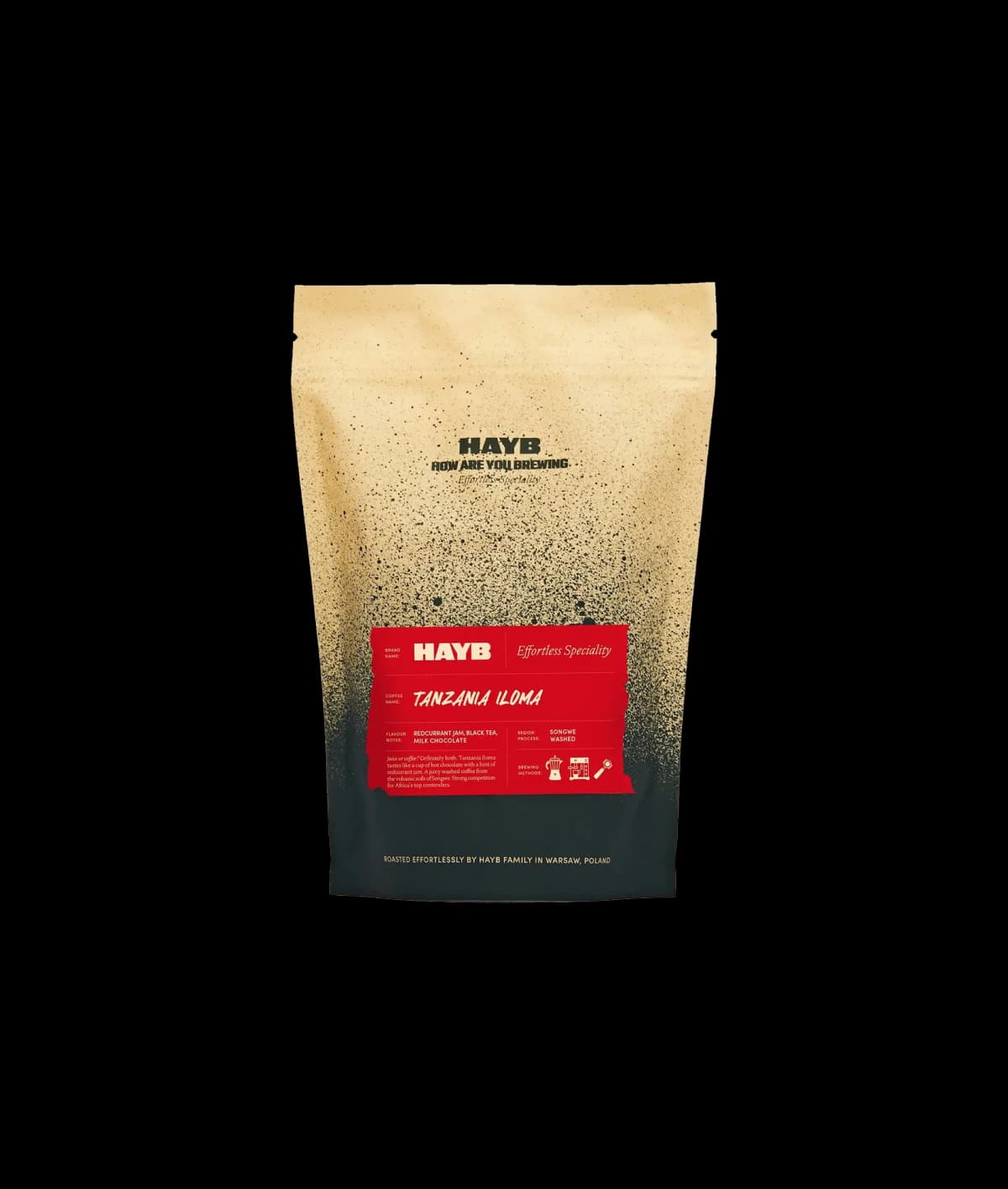
Tanzania Iloma Espresso
About This Coffee
Juice or coffee? We love African coffees. From other continents too, but at the moment - African the most. Warmth, sunshine, just sipping these juicy coffees day after day. These beans come from the Iloma AMCOS cooperative in the Songwe region of Tanzania. This cooperative receives coffee from 391 farmers. The coffee is grown at an altitude between 1800 and 1900 meters above sea level on fertile volcanic soils. The fruits are processed using the washed method - after harvesting, they go straight to the station, where they spend about 24 hours in water, and then dry for 11–14 days. In the cup, the coffee is like juice. Notes of red currants and lemongrass. Coffee first appeared in what is now Tanzania in the 16th century, initially in the Bukoba region, where local varieties were cultivated even before the colonial period. Currently, Tanzania produces an average of about 50–70 thousand tons of coffee annually, mainly Arabica. I'm not some coffee prophet, but I have a hot take that Tanzania is the new Kenya. What do you think?
Original roaster text
- Description
- Soczek czy kawka? Kochamy kawy z Afryki. Z innych kontynentów też, ale w tym momencie – z Afryki najbardziej. Ciepło, słoneczko, nic tylko popijać te soczyste kawy dzień za dniem. Te ziarna pochodzą ze spółdzielni Iloma AMCOS w regionie Songwe w Tanzanii. Do tej kooperatywy kawę dostarcza 391 farmerów. Kawę uprawiają na wysokości między 1800 a 1900 m n.p.m. na żyznych glebach wulkanicznych. Owoce są obrabiane metodą washed – po zbiorze trafiają od razu do stacji, gdzie spędzają w wodzie ok. 24 h, a następnie suszą się przez 11–14 dni. W filiżance kawa jest jak sok. Nuty czerwonych porzeczek i trawy cytrynowej. Kawa pojawiła się na terenach dzisiejszej Tanzanii po raz pierwszy w XVI wieku, początkowo w regionie Bukoba, gdzie uprawiano lokalne odmiany jeszcze przed okresem kolonialnym. Obecnie Tanzania produkuje średnio około 50–70 tysięcy ton kawy rocznie, głównie arabiki. Nie jestem jakimś kawowym prorokiem, ale mam taki hot take, że Tanzania to nowa Kenia. Co Ty na to?
This coffee is sold out
Sold out since Oct 2026


![Drip Bag Set [Geisha]](/_next/image?url=https%3A%2F%2Fcdn.shopify.com%2Fs%2Ffiles%2F1%2F0574%2F3286%2F6889%2Ffiles%2Fesmeralda3.png%3Fv%3D1730280052&w=3840&q=75)